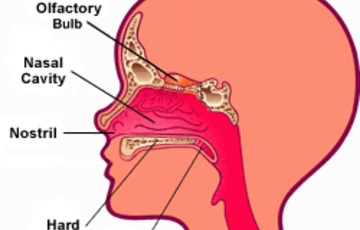
The Nose
1. Overview
The nose is the primary organ for breathing and smelling. It also filters, warms, and humidifies the air before it reaches the lungs. It is divided into:
-
External nose – the visible part on the face.
-
Internal nose (nasal cavity) – the hollow space inside.
2. External Nose
-
Nasal bridge: The bony upper part of the nose.
-
Nostrils (nares): Openings for air entry.
-
Nasal tip: The protruding end of the nose.
-
Ala: The rounded flared sides of the nostrils.
-
Columella: The tissue separating the two nostrils.
3. Internal Nose (Nasal Cavity)
-
Nasal septum: Divides the nasal cavity into right and left sides; made of bone and cartilage.
-
Nasal conchae (turbinates): Superior, middle, inferior – bony curves that increase surface area for air filtration, warming, and humidification.
-
Meatuses: Air passages beneath each concha.
-
Olfactory epithelium: Located at the top; contains smell receptors.
-
Respiratory epithelium: Lining most of the cavity; secretes mucus to trap particles.
4. Sinuses (Paranasal Sinuses)
Hollow spaces connected to the nasal cavity:
-
Frontal sinus – above the eyes.
-
Maxillary sinus – in the cheeks.
-
Ethmoid sinus – between the eyes.
-
Sphenoid sinus – deep behind the ethmoid sinuses.
5. Functions
-
Breathing: Passageway for air to reach lungs.
-
Smelling: Houses olfactory receptors.
-
Air conditioning: Warms, humidifies, and filters inhaled air.
-
Resonance: Contributes to voice sound.
-
Protection: Traps dust, microbes, and other particles with mucus and cilia.
Air comes into the body through the nose. As it passes over the specialized cells of the olfactory system, the brain recognizes and identifies smells. Hairs in the nose clean the air of foreign particles. As air moves through the nasal passages, it is warmed and humidified before it goes into the lungs.
The most common medical condition related to the nose is nasal congestion. This can be caused by colds or flu, allergies, or environmental factors, resulting in inflammation of the nasal passages. The body's response to congestion is to convulsively expel air through the nose by a sneeze.
Nosebleeds, known medically as epistaxis, are a second common medical issue of the nose. As many as 60 percent of people report nosebleed experiences, with the highest rates found in children under 10 and adults over 50.
diagram-of-human-nose.

